




A Vitamin Shot Given at Birth Prevents Lethal Brain Bleeds, but More Parents Are Opting Out
Vitamin K injections have prevented deadly brain bleeds in infants for more than 60 years. New research shows refusal rates have recently jumped nearly 80 percent
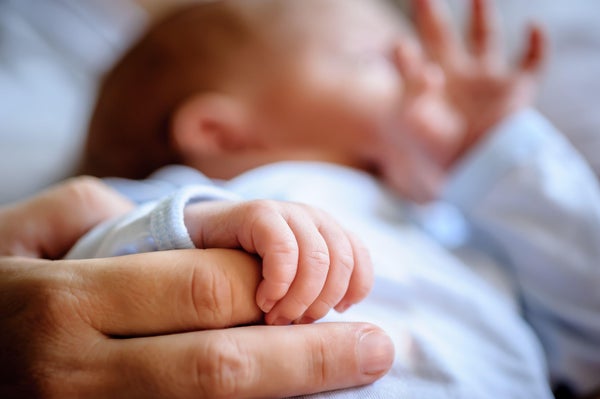
guruxox/Alamy Stock Photo
Pediatric hospitalist Jaspreet Loyal recently cared for a newborn who developed bleeding inside their skull after a home birth. The baby was admitted to the intensive care unit and required a prolonged hospital stay. The cause: vitamin K deficiency—a condition that is almost entirely preventable with a simple shot given at birth.
Such cases may become more common as more people refuse the shot. According to new research published today in JAMA, the rate of vitamin K shot refusals has risen nearly 80 percent in the U.S. between 2017 and 2024. The study, which examined medical records from more than five million births during that time period, found that the proportion of newborns who did not receive the injection climbed from 2.92 percent to 5.18 percent.
The trend comes at a time of growing vaccine hesitancy and science denial. Wellness influencers have fueled skepticism by characterizing the vitamin K shot as unnecessary and questioning its lab-made ingredients, even though they are found in many routine injections. But newborns are born with naturally low levels of vitamin K, a nutrient essential for blood clotting, says Kristan Scott, a neonatologist at Children’s Hospital of Philadelphia and lead author of the new study.
On supporting science journalism
If you’re enjoying this article, consider supporting our award-winning journalism by subscribing. By purchasing a subscription you are helping to ensure the future of impactful stories about the discoveries and ideas shaping our world today.
Without the shot, as many as one in 60 babies are at risk of vitamin K deficiency bleeding, which can cause permanent brain damage or death. The American Academy of Pediatrics has recommended the injection since 1961, and for more than six decades, the shot has been a quiet success story in newborn medicine.
“We know unequivocally that infants that don’t receive vitamin K are at significantly higher risk of getting serious bleeding,” Scott says. His study did not directly measure whether the increase in refusals has led to more bleeding events.
Some online influencers suggest that parents can use oral vitamin K as an alternative to the injection. But Scott says that approach is less reliable—oral vitamin K is less effective at preventing bleeds because it’s not absorbed as readily.
The shot itself carries minimal risk, and adverse reactions are rare. “Vitamin K is super safe to give to kids,” Scott notes.
Loyal, who works at Yale New Haven Children’s Hospital and has also researched vitamin K refusal, emphasizes that the shot differs fundamentally from a vaccine because it doesn’t target a microorganism—it simply supplies an essential vitamin. Her research has identified some of the most common reasons parents cite for refusing the shot, including the belief that its risks outweigh its benefits or the desire for a more “natural” approach.
Although the risk of vitamin K deficiency bleeding may seem low, Loyal says, “it’s not zero—and why take a chance when we know there is a safe preventative measure?”
It’s Time to Stand Up for Science
If you enjoyed this article, I’d like to ask for your support. Scientific American has served as an advocate for science and industry for 180 years, and right now may be the most critical moment in that two-century history.
I’ve been a Scientific American subscriber since I was 12 years old, and it helped shape the way I look at the world. SciAm always educates and delights me, and inspires a sense of awe for our vast, beautiful universe. I hope it does that for you, too.
If you subscribe to Scientific American, you help ensure that our coverage is centered on meaningful research and discovery; that we have the resources to report on the decisions that threaten labs across the U.S.; and that we support both budding and working scientists at a time when the value of science itself too often goes unrecognized.
In return, you get essential news, captivating podcasts, brilliant infographics, can’t-miss newsletters, must-watch videos, challenging games, and the science world’s best writing and reporting. You can even gift someone a subscription.
There has never been a more important time for us to stand up and show why science matters. I hope you’ll support us in that mission.


