




U.S. Sunscreens Aren’t Great. The FDA Could Soon Change That
The U.S. is considering allowing bemotrizinol, a highly effective UV filter used throughout Europe and Asia, in its sunscreen products for the first time
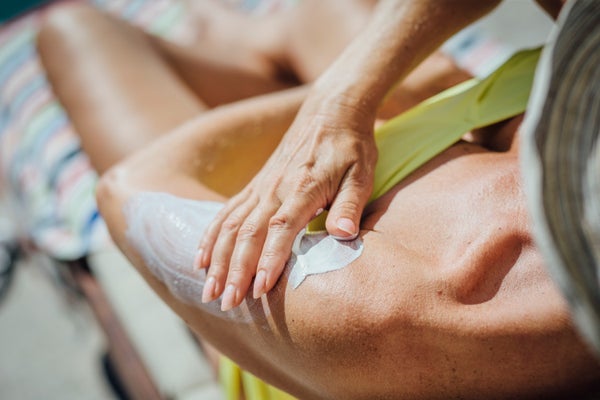
Sunscreens in the U.S. could be in line for a long overdue update. On Thursday the U.S. Food and Drug Administration announced a proposal to permit the use of bemotrizinol, a broad-spectrum ultraviolet (UV) chemical filter. The ingredient is well known for its effectiveness and is already used in many popular sunscreen brands produced in other parts of the world, such as Asia and Europe. That’s why social media is rife with “sunscreen haul” videos of Americans showing off their Asian- and European-made lotions and sprays.
In the announcement, FDA Commissioner Marty Makary said that the agency “has historically moved too slowly in this area, leaving Americans with fewer options than consumers abroad.” Compared with Europe’s more than 30 approved UV-filtering ingredients, the U.S. has only 16, with the last active ingredient approved in 1999. Bemotrizinol was approved in Europe in 2000 and has been shown to be safe and effective. Sunscreens with bemotrizinol also tend to have a lighter weight and to be longer lasting and less greasy than those with other ingredients.
The proposal, which comes after years of attempts to overhaul U.S. sunscreen regulation, would allow sunscreen products with bemotrizinol to be sold over the counter in the U.S., perhaps bringing an end to the criticism that the country has lagged behind on sunscreen.
On supporting science journalism
If you’re enjoying this article, consider supporting our award-winning journalism by subscribing. By purchasing a subscription you are helping to ensure the future of impactful stories about the discoveries and ideas shaping our world today.
Part of the reason why the U.S. has seemed behind Europe and Asia on sun protection is because the FDA treats sunscreen as a drug, which means that it is tightly regulated and that new products need to be extensively tested, dermatologist Samer Jaber told Scientific American in 2023.
Sunscreen protects people from harmful UV rays from the sun that can cause skin cancer. Mineral sunscreens effectively “block” the sun’s radiation from penetrating the skin, while chemical sunscreens sink into the skin and absorb the rays. Some chemical sunscreen ingredients are effective in filtering out UVA, or longer-wave ultraviolet light from the sun, while others are more attuned to shorter UVB waves. Bemotrizinol can filter both, offering broad-spectrum protection. The FDA says that sunscreen with a sun protective factor (SPF) of 15 or higher helps prevent sunburn and reduces skin cancer risk.
It’s Time to Stand Up for Science
If you enjoyed this article, I’d like to ask for your support. Scientific American has served as an advocate for science and industry for 180 years, and right now may be the most critical moment in that two-century history.
I’ve been a Scientific American subscriber since I was 12 years old, and it helped shape the way I look at the world. SciAm always educates and delights me, and inspires a sense of awe for our vast, beautiful universe. I hope it does that for you, too.
If you subscribe to Scientific American, you help ensure that our coverage is centered on meaningful research and discovery; that we have the resources to report on the decisions that threaten labs across the U.S.; and that we support both budding and working scientists at a time when the value of science itself too often goes unrecognized.
In return, you get essential news, captivating podcasts, brilliant infographics, can’t-miss newsletters, must-watch videos, challenging games, and the science world’s best writing and reporting. You can even gift someone a subscription.
There has never been a more important time for us to stand up and show why science matters. I hope you’ll support us in that mission.


