




Scientists Find Extinct Rhino DNA in Wolf Pup Mummy’s Stomach
Scientists have sequenced the genome of the long-extinct woolly rhinoceros from remains found in the stomach of a naturally mummified Pleistocene wolf pup
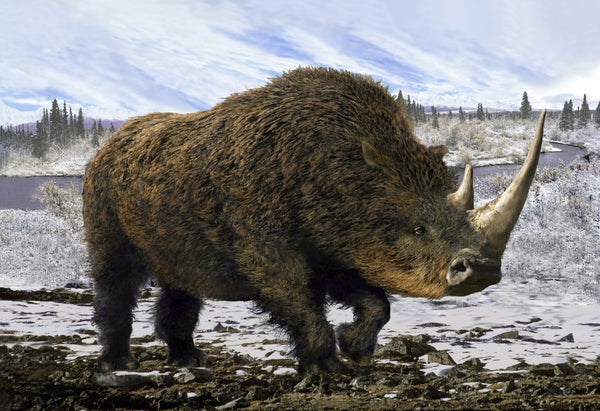
An artist’s depiction of a woolly rhino on the tundra.
Scientists have successfully sequenced the genome of the long-extinct woolly rhinoceros from an unusual place: the stomach contents of a naturally mummified Pleistocene wolf pup from Siberia.
As its name suggests, the woolly rhinoceros (Coelodonta antiquitatis) had long, shaggy hair that made it perfectly suited for life on the frigid Eurasian steppe. The animal, which sported two horns on its snout, was comparable in size to modern rhino species. The current fossil record suggests the animal went extinct around 14,000 years ago (although there is some evidence that this may have happened as recently as 9,000 years ago). Sequencing the genomes of such extinct megafauna can help identify the culprit behind their extinction, providing tools to counter the pervasive threats species face today.
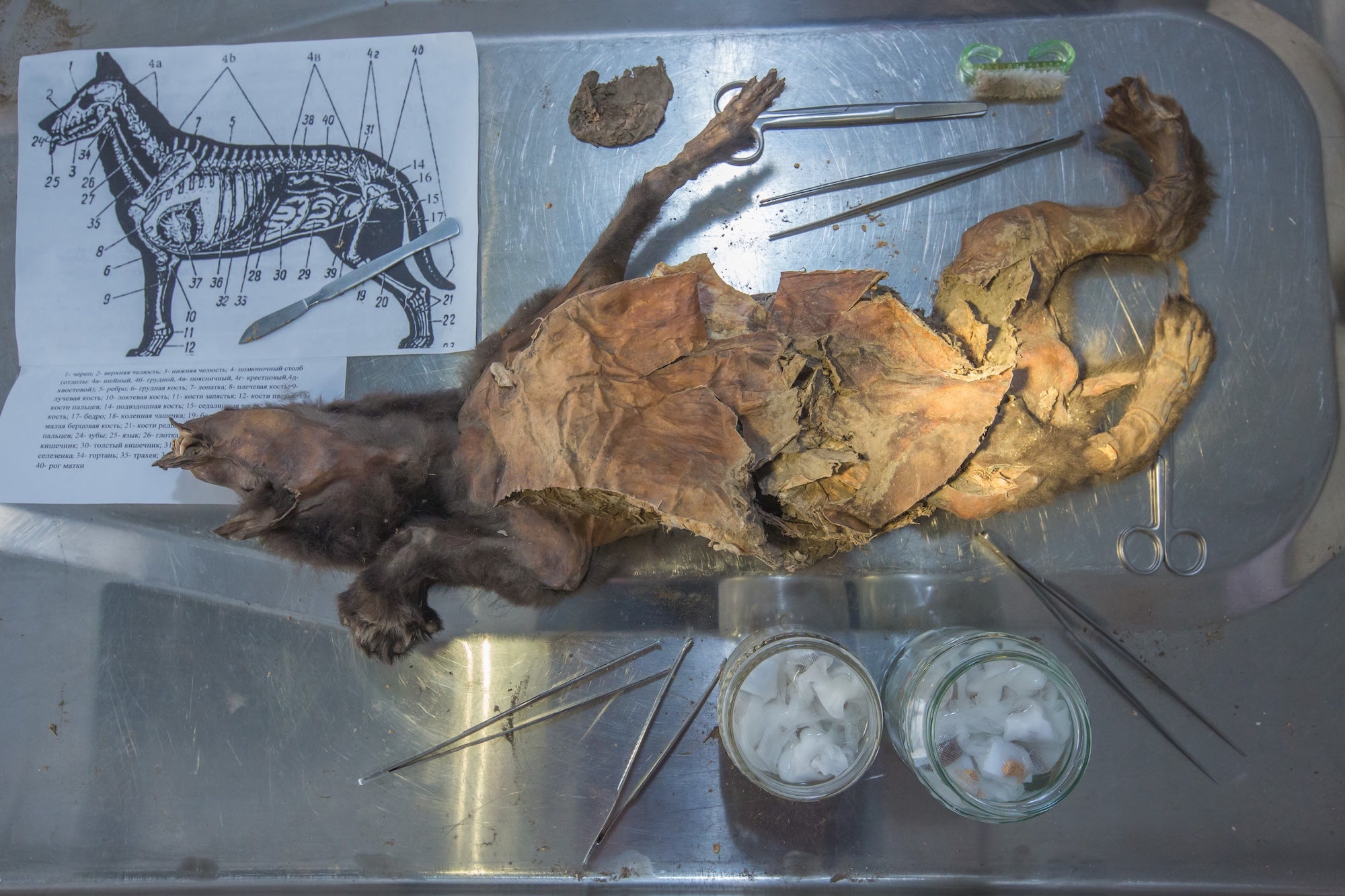
The mummified wolf puppy found in the permafrost in Siberia.
On supporting science journalism
If you’re enjoying this article, consider supporting our award-winning journalism by subscribing. By purchasing a subscription you are helping to ensure the future of impactful stories about the discoveries and ideas shaping our world today.
At about 14,400 years of age, a preserved tissue fragment of the woolly rhino that the young wolf (Canis lupus) ate is one of the few examples we have of the former species at a time that was so close to its possible extinction. And surprisingly, the woolly rhino’s genetics offer no indication of a declining population. Instead researchers discovered that the population seemed to be stable and genetically healthy, with DNA similar to much older specimens and no signs of inbreeding, which would be expected if the rhino species’ numbers were dwindling. “The population [was] very stable across tens of thousands of years,” says study co-author J. Camilo Chacón-Duque, until recently a researcher at the Center for Palaeogenetics in Sweden. The study, published on Wednesday in Genome Biology and Evolution, indicates that whatever caused the woolly rhinoceros’ extinction, it happened fast.
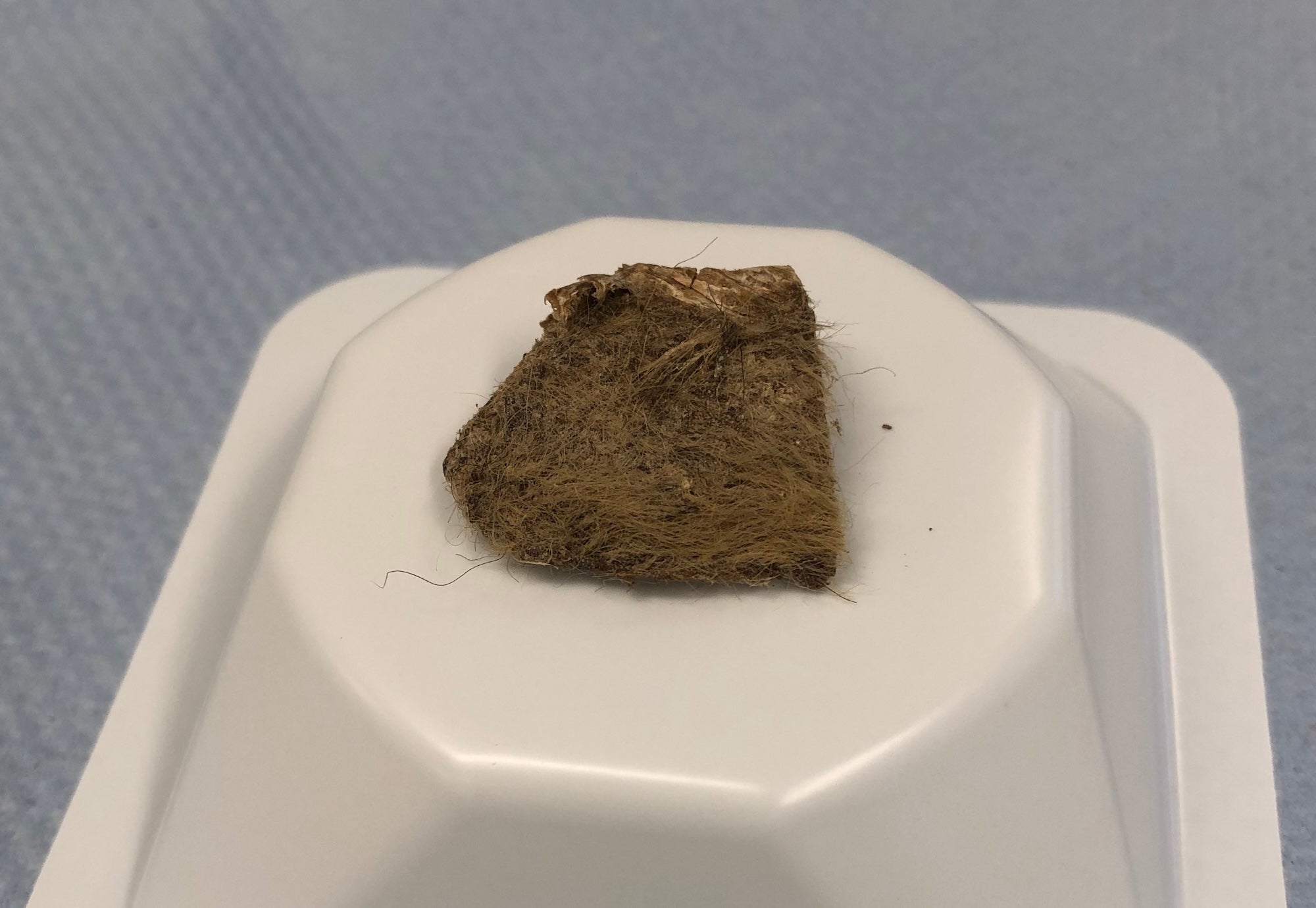
The piece of woolly rhino tissue found inside the stomach of the wolf puppy.
Love Dalén/Stockholm University
The team suggests that a period of rapid warming in the Northern Hemisphere that began 14,700 years ago could be the cause of the extinction.
Kamilla Pawłowska, a paleontologist at Adam Mickiewicz University, Poznań, in Poland and founder of the WOOLRHINOPOLI Project, who was not involved in the research, praises the work but emphasizes that DNA from multiple woolly rhinos over various countries will be needed to give a more complete picture of the species’ demise.
It’s Time to Stand Up for Science
If you enjoyed this article, I’d like to ask for your support. Scientific American has served as an advocate for science and industry for 180 years, and right now may be the most critical moment in that two-century history.
I’ve been a Scientific American subscriber since I was 12 years old, and it helped shape the way I look at the world. SciAm always educates and delights me, and inspires a sense of awe for our vast, beautiful universe. I hope it does that for you, too.
If you subscribe to Scientific American, you help ensure that our coverage is centered on meaningful research and discovery; that we have the resources to report on the decisions that threaten labs across the U.S.; and that we support both budding and working scientists at a time when the value of science itself too often goes unrecognized.
In return, you get essential news, captivating podcasts, brilliant infographics, can’t-miss newsletters, must-watch videos, challenging games, and the science world’s best writing and reporting. You can even gift someone a subscription.
There has never been a more important time for us to stand up and show why science matters. I hope you’ll support us in that mission.


