



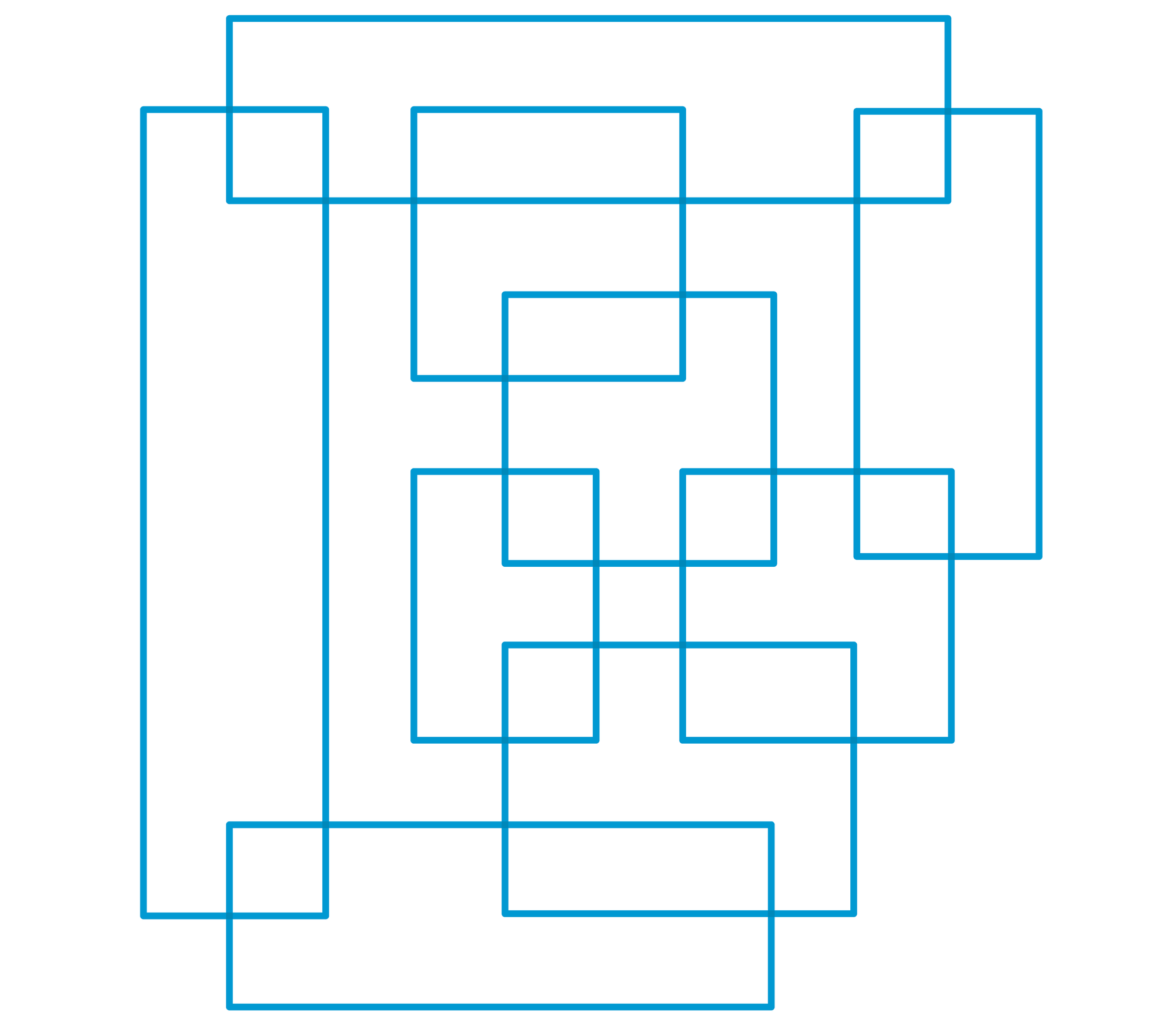
The nine rectangles A, B, C, D, E, F, G, H and I overlap one another. Rectangle A intersects rectangles D and F; this relation can be written in shorthand as A\(D, F). Furthermore,
B\(F, G)
C\(G, H)
D\(A, H)
E\(H, I)
F\(A, B, I)
G\(B, C, I)
H\(C, D, E)
I\(E, F, G)
Label the rectangles correctly with the letters A to I.
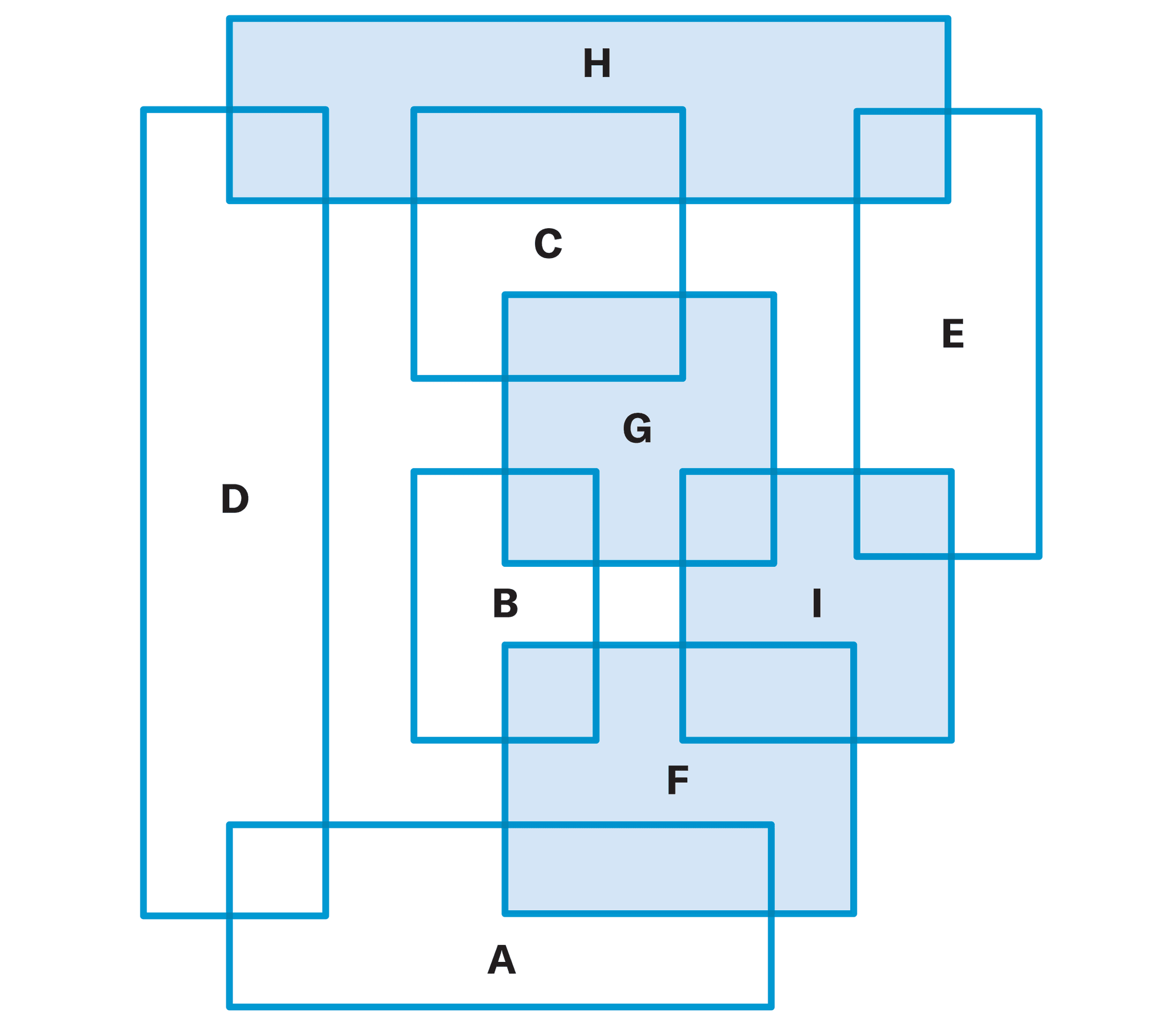
Only the four blue-shaded rectangles below intersect three other rectangles, and therefore they must be F, G, H and I. H doesn’t intersect F, G or I, whereas I intersects both F and G. Consequently, H is the topmost blue-shaded rectangle, and I is the third from the top. Because B\(F, G) and E\(H, I), the two rectangles B and E also can be identified. The rest is simple.
We’d love to hear from you! E-mail us at games@sciam.com to share your experience.
This puzzle originally appeared in Spektrum der Wissenschaft and was reproduced with permission.


