



Theorists have proposed many explanations for consciousness. They are startlingly diverse, with different goals, starting points and even definitions of consciousness. To compare them, researchers surveyed articles suggesting a theoretical model for consciousness that were published between 2007 and 2017 in English or Italian.
Some of these theories have many publications to their name, such as global workspace theories, higher-order theories and integrated information theory, three of the field’s leading models. But having more publications does not mean a theory is supported by stronger evidence—this analysis didn’t weigh the strength of study results. Instead the number of articles most likely reflects the amount of interest each type of theory garnered. This may explain why quantum theories of consciousness, which are fascinating but not yet grounded in much evidence, have been proposed so many times. Predictive processing theories, which are also influential in the field, are notably absent, perhaps because they originated as theories of perception rather than consciousness.
On supporting science journalism
If you’re enjoying this article, consider supporting our award-winning journalism by subscribing. By purchasing a subscription you are helping to ensure the future of impactful stories about the discoveries and ideas shaping our world today.
The researchers found 68 articles that analyzed theoretical aspects of consciousness and that were published between 2007 and 2017 in English or Italian. Together, they represent 29 different types of theories. More than half (18) were suggested only once, but others garnered more interest.
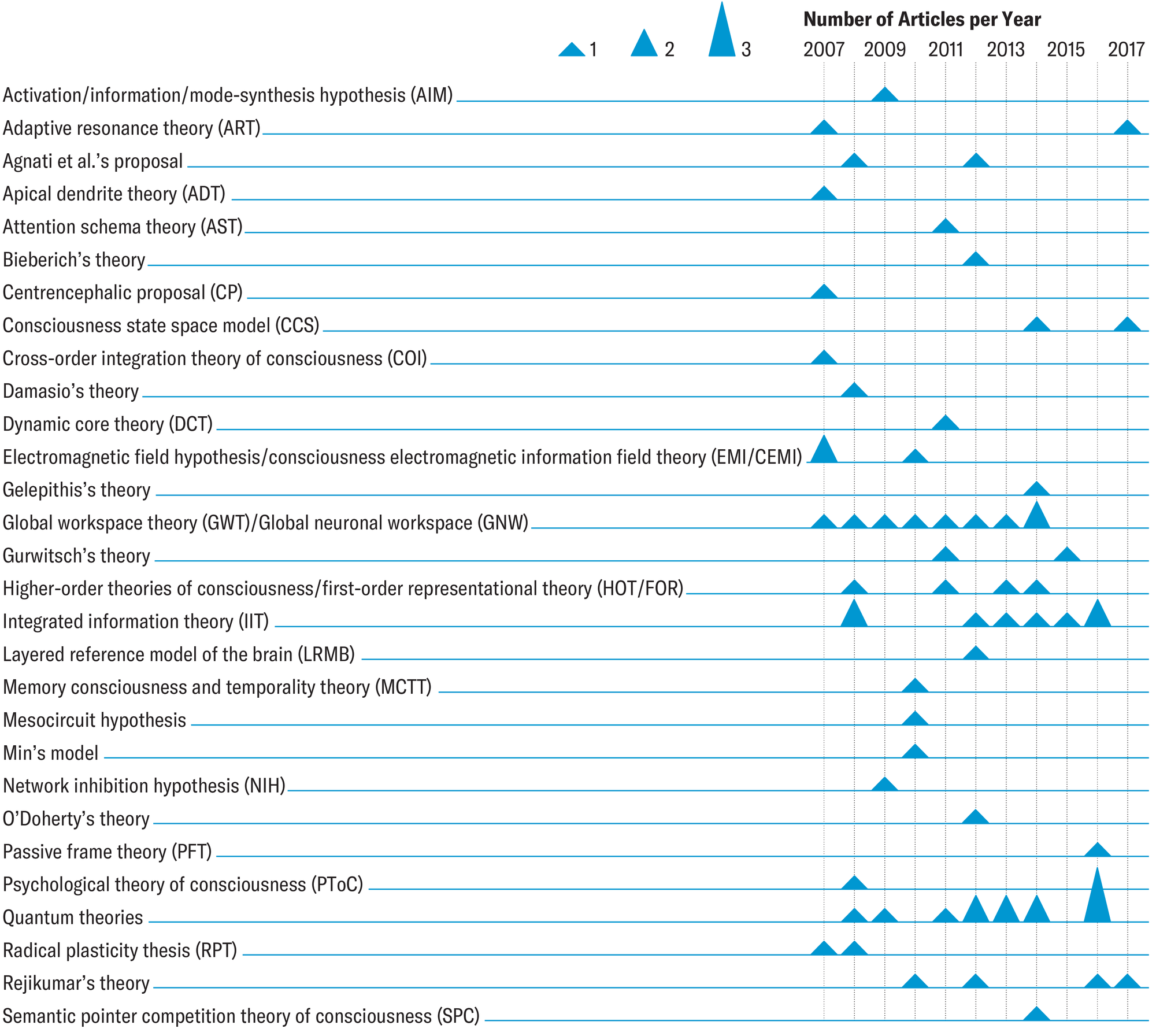
Jen Christiansen; Source: “Theoretical Models of Consciousness: A Scoping Review,” by Davide Sattin et al., in Brain Sciences, Vol. 11; April 2021 (data)
THEORY CHARACTERISTICS
All of these proposals are wildly different, and only some are supported by evidence. The researchers analyzed how each tried to address six dimensions of consciousness: (A) what brain activity correlates with conscious experience, (B) how consciousness relates to other mental faculties such as memory and attention, (C) the clinical treatment of disorders involving consciousness, (D) how levels of consciousness could be measured, (E) how consciousness relates to sensory information, and (F) where subjective experience comes from.
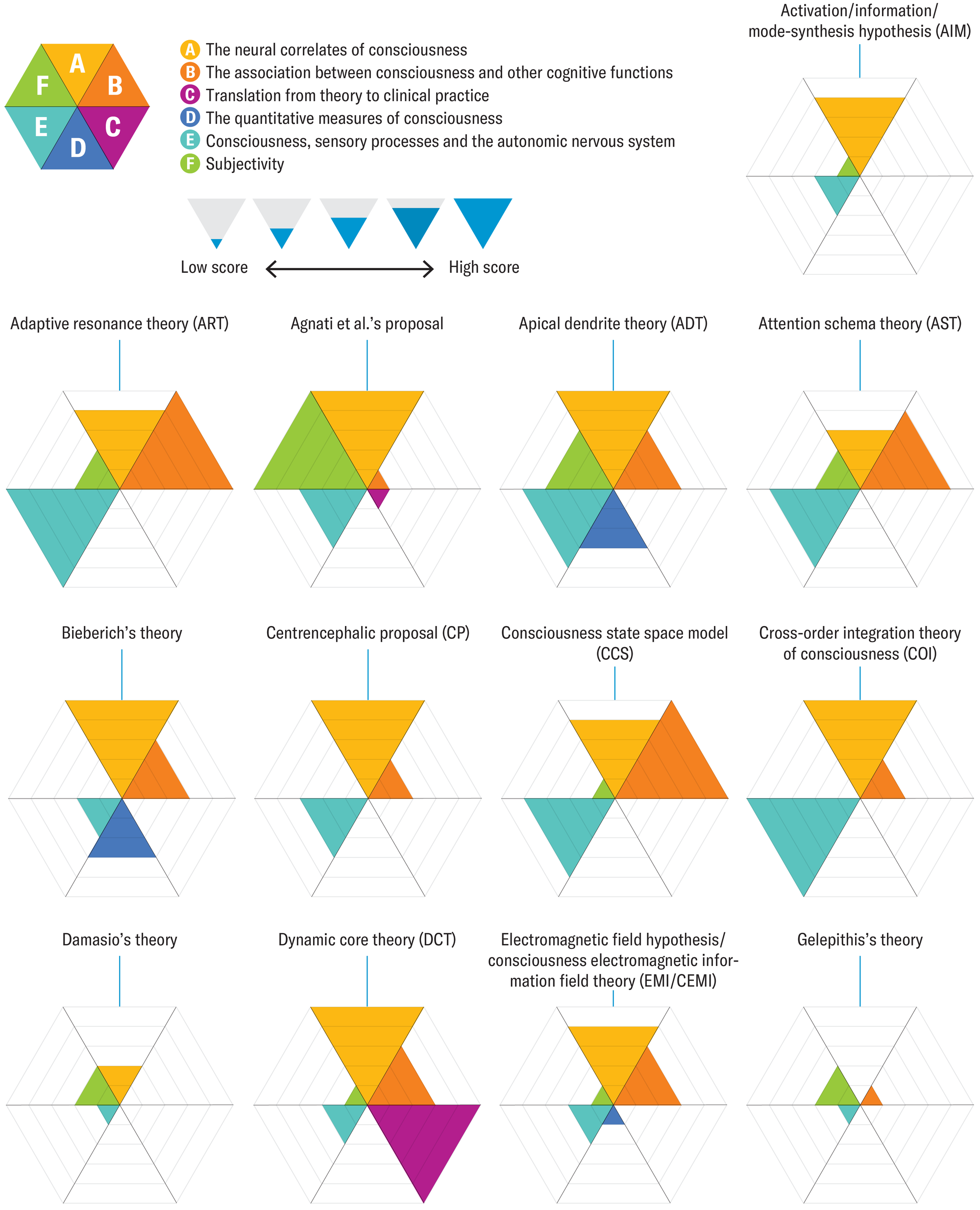
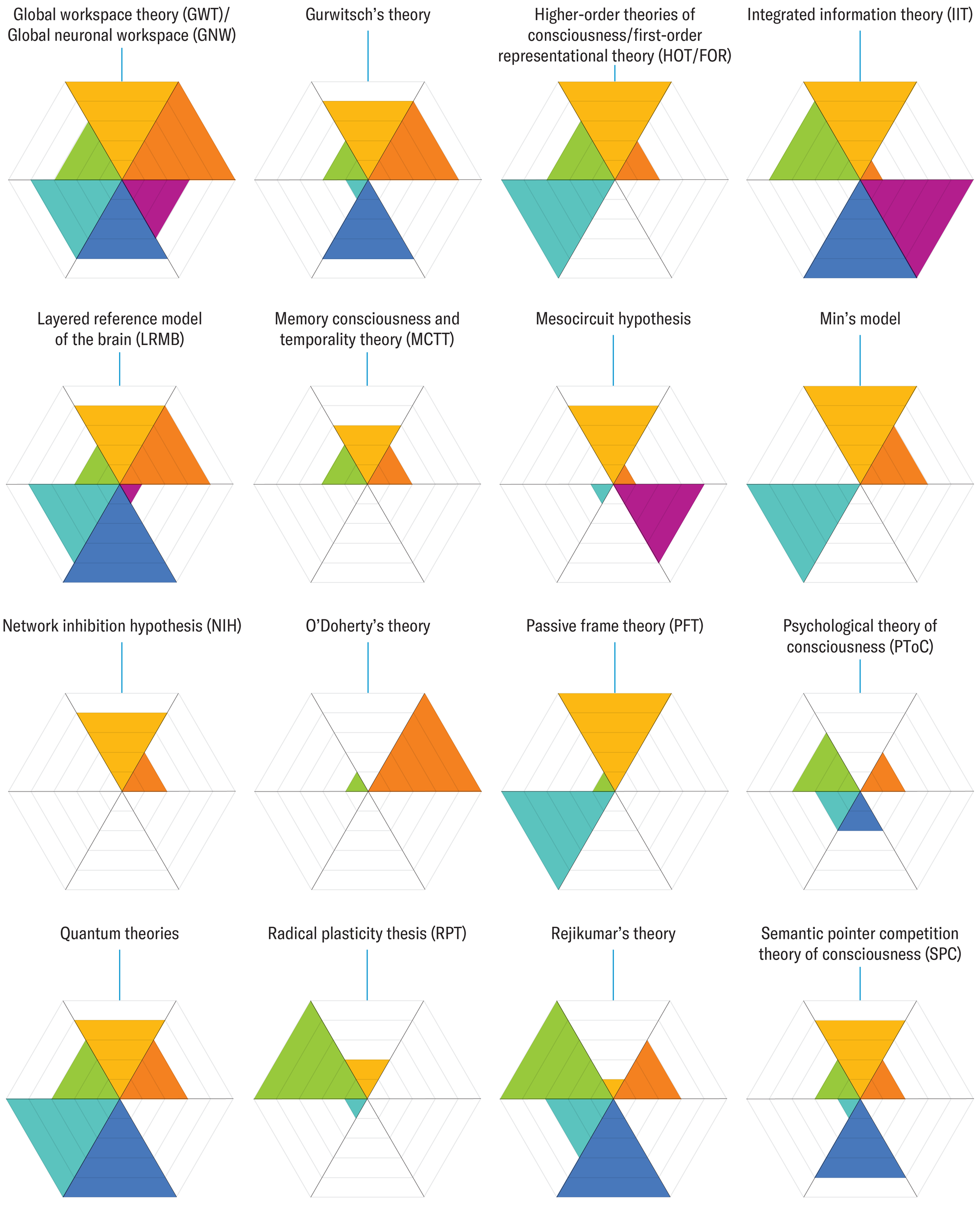
Jen Christiansen; Source: “Theoretical Models of Consciousness: A Scoping Review,” by Davide Sattin et al., in Brain Sciences, Vol. 11; April 2021 (data)
It’s Time to Stand Up for Science
If you enjoyed this article, I’d like to ask for your support. Scientific American has served as an advocate for science and industry for 180 years, and right now may be the most critical moment in that two-century history.
I’ve been a Scientific American subscriber since I was 12 years old, and it helped shape the way I look at the world. SciAm always educates and delights me, and inspires a sense of awe for our vast, beautiful universe. I hope it does that for you, too.
If you subscribe to Scientific American, you help ensure that our coverage is centered on meaningful research and discovery; that we have the resources to report on the decisions that threaten labs across the U.S.; and that we support both budding and working scientists at a time when the value of science itself too often goes unrecognized.
In return, you get essential news, captivating podcasts, brilliant infographics, can’t-miss newsletters, must-watch videos, challenging games, and the science world’s best writing and reporting. You can even gift someone a subscription.
There has never been a more important time for us to stand up and show why science matters. I hope you’ll support us in that mission.


